
Showing posts with label dumplings. Show all posts
Showing posts with label dumplings. Show all posts
Friday, October 16, 2020


Tuesday, September 8, 2020

INTERNATIONAL: Bread of the Week 35 - Calas and Crusty French Dinner Rolls
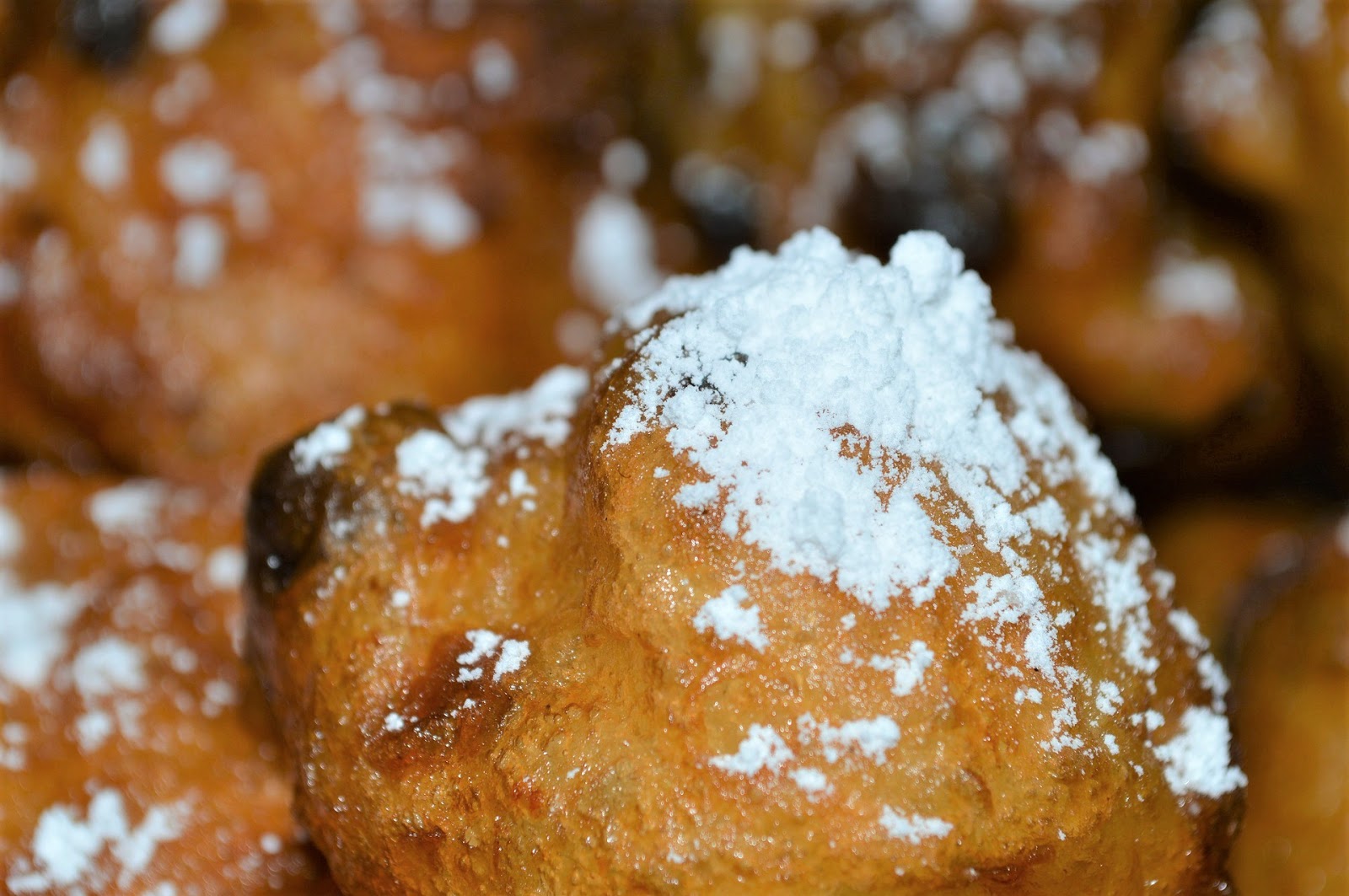
According to Wiki: Calas (/ kəˈlɑː /) are dumplings composed primarily of cooked rice, yeast, sugar, eggs, and flour; the resulting batter is deep-fried. It is traditionally a breakfast dish, served with coffee or cafe au lait, and has a mention in most Creole cuisine cookbooks. Calas are also referred to as Creole rice fritters or rice doughnuts.
They originated in western Africa (the traditional rice-growing region of West Africa, stretching from Senegal down to Sierra Leone and Liberia) and then to France (beignets de riz)and also to Creole in USA.




Wednesday, April 10, 2013
Western PA Ethnic Cooking - Part 4 - Hungarian - recipes and photos
The Hungarian emigration to the United States and especially western PA. heavily occurred in the 1880's. Pre-1900 mostly were single men in age from 19-35 who were miners and manufacturers of steel and iron. They lived in boarding houses and were of various religious denominations. Heavy area of the immigrants were in McKeesport near Pittsburgh.
However during WWI several more emigrated to Western PA and Saskatchewan in Canada.
WIKI TRAVEL LINK
WIKI ON HUNGARY
Some of the foods in PA at that time were:


However during WWI several more emigrated to Western PA and Saskatchewan in Canada.
WIKI TRAVEL LINK
WIKI ON HUNGARY
Some of the foods in PA at that time were:
- goulashes: Hungarian, veal, goulash with sauerkraut, noodles
- chicken paprika (paprikash) and dumplings
- Hungarian crepes
- cheese cake squares
- RECIPE LINKS BELOW in WHITE, RED AND GREEN (colors of Hungarian flag)




Saturday, November 3, 2012
The Harmonists I - 18th & 19th century German cooking
Was in Economy (Old Economy Village), Pa in September (There was a FEST that weekend)
(see my personal photos at bottom of page)
which is the final home of the Harmony Society, one of America's most successful Christian communal groups. It is a National Historic Landmark that is open year round. There are 16,000 Harmonist objects exhibited in 17 restored structures between 1824 and 1830.
The purpose of this blog is to talk about the food (German) with excerpts from 18th and 19th century German cookbooks in the collections of Old Economy Village.
Courtesy of the interesting read I purchased entitled "from the Harmonist "Küche" ".
Why am I writing this series? I am German, Scotch-Irish and Welsh from western Pennsylvania.
And, yes, I am a Steelers' fan!

PERSONAL STORY 1: I lived in Germany for a year in the little town of Oberrodenbach (near Hanau and Frankfort) (which means over the Rodenbach river) where I learned to appreciate and come to love "spargle" or white asparagus freshly picked every day and a pound was 25 pfennig (German pennies) (I tried to find out what a pfennig was worth back then but I couldn't find it. I think at that time in the middle 1960's that the dollar was equal to the mark so the pound of spargle cost me 25 cents American) and was delivered to your door. It was grown in mounds underground to keep the sun from getting to it (thus no chorophyll) so it would be white. The skin was tougher than green asparagus and you had to use a potato peeler to remove the skin. My German neighbor didn't have one nor had never seen a potato peeler


Enough of that story but since my heritage is German (my dad sang to me in German when I was small) and having had the fortune of living there for a year I am interested in all things German, especially German cooking.
--------------------------------------
Cookbooks in the 18th and 19th century were nothing like they are now!!
No photos and no number of servings
and no measurements and no temperatures!!
A lot of the recipes come from Tübingen in Würrtemberg, Germany (I lived in Hessen area which you can see on the map north of Würrtemberg)
I have a included a link below from WIKI showing the area. If you click on the map it will get larger and you can find the area noted.
NOTE: I know the link above looks crazy but it works!!


EXCERPT ONE:
Cabbage Soup
Take half of a white head of cabbage; remove the inner rib. Cabbage is boiled lightly in salted water. Drain, put in fresh cold water. You may use a strainer or a napkin, so that the cabbage is well drained. A piece of butter is added to a broth, seasoned with nutmeg and pepper; allow drained cabbage to boil till soft. (This is confusing to me. Says nothing about putting the cabbage back in the water nor any measurements for the nutmeg and pepper nor for the amount of time to cook it ...) Prepare a soup of meat broth; serve over white bread slices; arrange cabbage in the middle. Pour broth over all.
EXCERPT TWO:
Apple Dumplings
Peel sour apples, as many as you need. Chop them fine; roast them a little in LARD. Take a few peeled, chopped almonds, moisten them just barely in sweet cream. Mix all this together with finely grated bread crumbs. Add eggs to bring to the right thickness. Add raisins, sugar and cinnamon. Roll the formed round dumplings in flour and fry in LARD. With this belongs a sweet broth made from sugar, cinnamon, chopped almonds, onions, raisins and a little wine.
EXCERPT THREE:
Young Chickens with Currants
Boil or roast young chickens as you like. Take currants, add wine, cinnamon, and sugar and let boil together. Pour this broth over the chickens.
All excerpts above from "from the Harmonist "Küche" ".
What do you think? This is the FIRST PART OF A SERIES
Below are a few of my personal photos from my trip:


Subscribe to:
Posts (Atom)