Translate

Showing posts with label apulia. Show all posts

Wednesday, July 7, 2021

INTERNATIONAL GREECE: Part 2 - Griko cuisine merges with Italian cuisine

Greek presence in Italy begins with the migrations of the old Greek Diaspora (see world map below)


The darker the red in the photo above means the more Greeks in the area.  

Dark Red: 1,000,000 or more
Next Red:  200,000 or more
Next Red:  50,000 to 100,000
Next Red:  20,000-50,000
Next:  1,000-20,000
Gray 1,000 or less

Greek Americans (Greek: ΕλληνοαμερικάνοιEllinoamerikanoi) are Americans of full or partial Greek ancestry. About 1.3 million American people are of Greek descent, although there are estimates that raise this number to 3 million, and 321,144 people older than five spoke Greek at home in 2010.

in the 8th century BC, continuing down to the present time. There is a linguistic minority known as the Griko people, who live in the Southern Italian regions of Calabria (Province of Reggio Calabria) 
and Apulia or Puglia, especially the peninsula of Salento, within the old Magna Graecia region, who speak a distinctive dialect of Greek called Griko. They are believed to be remnants of the ancient and medieval Greek communities, who have lived in the south of Italy for centuries. Alongside this group, a smaller number of more recent migrants from Greece lives in Italy, forming an expatriate community in the country. Today many Greeks in Southern Italy follow Italian customs and culture.


During many centuries of cohabitation there was an exchange of knowledge between Griko and Southern Italians in the art of cooking. The Griko are traditionally producers of cereals, vegetables, olives and legumes.  Local Griko cuisine does not differ greatly from the local Italian population, however there local regional variations. Many typical Griko dishes are still in use among them. Some of them are mentioned below.

Sadly the Grikos culture is disappearing as they meld with the Italians in Calabria and Apulia. 


Pitta and Lestopitta - a traditional Greek-Calabrian 
bread from the Bovesia region


Ciceri e ttrìa - A form of Tagliatelle served with chickpeas. Traditionally this dish was consumed on the feast of Saint Joseph on 19 March in Grecia Salentina. 


  • Cranu stompatu - a wheat dish, prepared in a simple way, by soaking and pounding the wheat
  • ricchiteddhe - type of macaroni
  • minchiarieddhi - a type of long macaroni
  • sagne ncannulate - a wide tagliatelle up to inch and a half

  • triddhi - irregular shaped pasta, specifically used for making Broth
  • Ricchiteddhe cu lle rape - Orecchiette with turnip greens, a popular dish in Grecia Salentina


  • Turcinieddhi - a type of tripe which includes grilled sheep innards
  • Mendulata te cranu - a dessert similar to Pastiera, filled with cream cheese, honey, sugar and vanilla


  • Le Cuddhure - a traditional Griko cake made during Easter, from the Greek Koulouri
Tiaulicchiu - Hot Chili peppers, extensively eaten throughout Grecia Salentina, they are usually stored dry, or preserved in jars of oil, with the addition of slivers of garlic, mint, and capers


  • Sceblasti - a traditional type of hand made bread from the Grecia Salentina region.


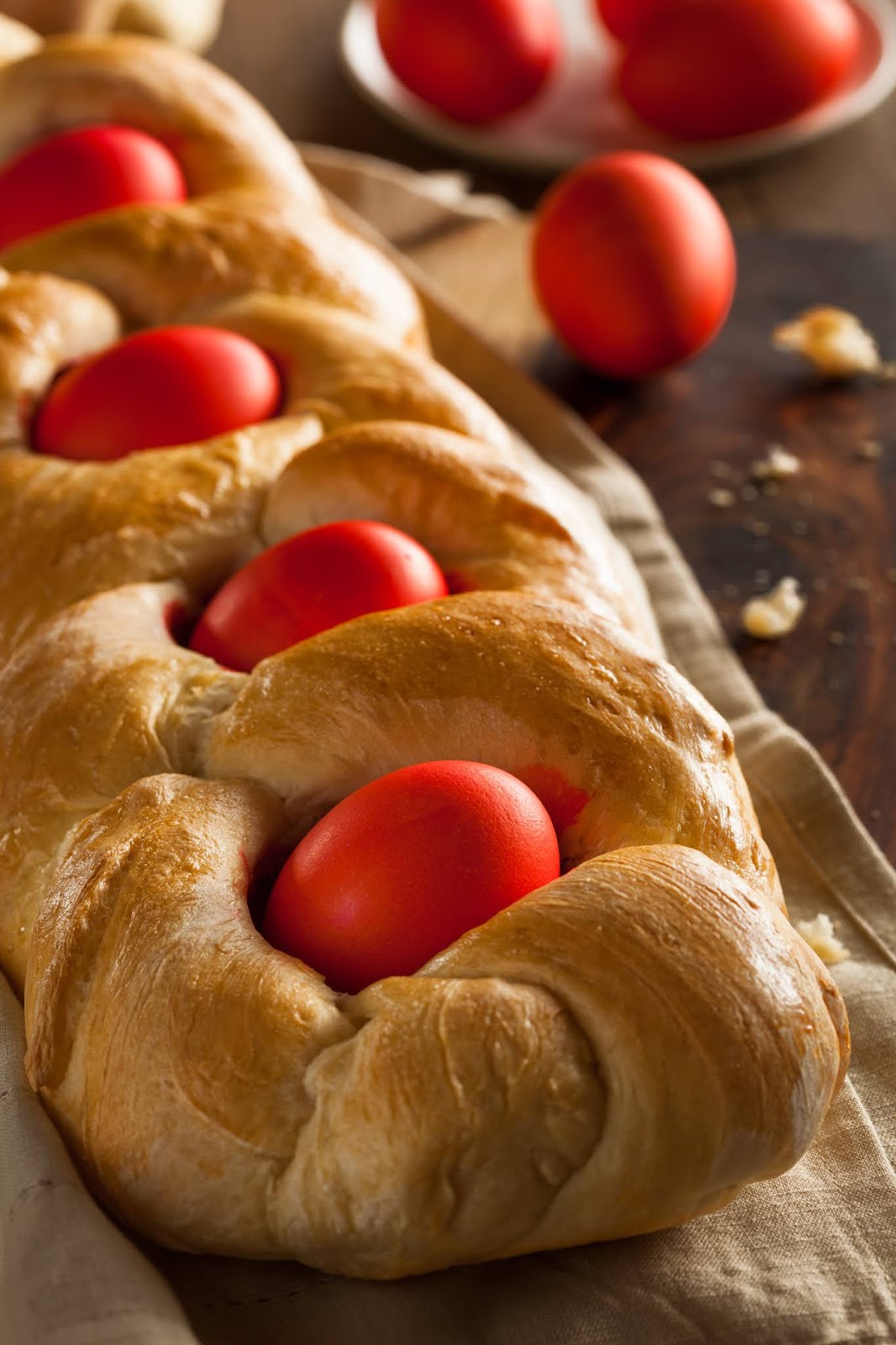
  • Aggute - a traditional Greek-Calabrian Easter bread from the Bovesia region, it is prepared with a mixture of flour, eggs and butter and the surface is decorated with painted hard boiled eggs, similar to the Greek Tsoureki


  • Scardateddhi - traditional Greek-Calabrian wedding sweets, made from flour, honey and anise seeds which are shaped like small doughnuts. They are then cooked in boiling water, and sprinkled with brown sugar before being served.


A book about the cuisine of the Griko of Salento has been published, entitled Grecia Salentina la Cultura Gastronomica. It features many traditional recipes distinctive to the Grecia Salentina region of southern Apulia.

----------------------------------------------------------------


LINK TO THE MYSTERIOUS PATMOS

LINK to A GLASS OF WINE AND A SHIBBOLEH FOR TRANSPLANTED PEOPLES


-------------------------------------------------------


Saturday, November 28, 2020

INTERNATIONAL: BORDERLESS CUISINE 6 - A REVISIT TO GRIKO (ancient Greek civilization still existing in Puglia and Sicily) ITALY -


During many centuries of cohabitation there was an exchange of knowledge between Griko (transplanted Greeks) and Southern Italians in the art of cooking. The Griko are traditionally producers of cerealsvegetables, olives and legumes. Local Griko cuisine does not differ greatly from the local italian population, however there are local regional variations. Many typical Griko dishes that are still in use among them. Some of them are mentioned below. 

Pitta and Lestopitta - a traditional Greek-Calabrian bread from the Bovesia region.


Ciceri e ttrìa - A form of Tagliatelle served with Chickpeas. Traditionally this dish was consumed on the feast of Saint Joseph on 19 March in Grecia Salentina.


Cranu stompatu - a wheat dish, prepared in a simple way, by soaking and pounding the wheat


TYPES OF PASTAS


Tiaulicchiu - Hot Chili peppers, extensively eaten 
throughout Grecia Salentina, they are usually stored dry, or preserved in jars of oil, with the addition of slivers of garlic, mint, and capers.


Sceblasti - a traditional type of hand made bread from the Grecia Salentina region. 


Aggute - a traditional Greek-Calabrian Easter bread from the Bovesia region, it is prepared with a mixture of flour, eggs and butter and the surface is decrated with painted hard boiled eggs, similar to the Greek Tsoureki 


Scardateddhi - traditional Greek-Calabrian wedding sweets, made from flour, honey and anise seeds which are shaped like small doughnuts. They are then cooked in boiling water, and sprinkled with brown sugar or iced with honey before being  served.


A book about the cuisine of the Griko of Salento 

habeen published, entitled Grecia Salentina la 

Cultura Gastronomica. It features many  

traditional recipes distinctive to the Grecia 

Salentina region of southern  Apulia.


Above from WIKI 


-----------------------------

LINKS TO PREVIOUS BORDERLESS CUISINE POSTS


LINK to Part 1 - Grits

Tuesday, March 29, 2016

ITALY: PUGLIA April Food Festivals: Frittata/Frittato and Taralli


  • April

    On the 23rd, the Festival of San Giorgio celebrations at Vieste (Foggia) are combined with celebrations of the more prosaic frittato or frittata (omelette).


***************************************************************************

What could be nicer than a festival of biscuits and wine? The Sagra dei Tarallucci e Vino takes place in Alberobello (Bari) from the 28th and celebrates both. The stars of the show are the little taralli - traditional sweet or savoury Pugliese biscuits.


Taralli Recipe 1

Taralli Recipe 2

VIDEOS BELOW


Italian grandma makes taralli:

      https://www.youtube.com/watch?v=qsBt1n8sdRU


Thursday, March 17, 2016

INTERNATIONAL: ITALY: Puglia Easter Fair - Cuddura (donut)

March 27th this year 2016

Santa Cesàrea Terme (Lecce) pays tribute to the ring-shaped, deep-fried cuddrura, an Easter sweet which was traditionally made at home; you can track it down in 
bakeries during this period in Italy.  (PHOTOS and recipe BELOW)

The term cuddura derives from the ancient Greek κολλύρα ( kollura ) which means crown and originally meant underlined its shape. Today the name cuddura tends to a real Italianisation, but it is an original dialectic of  Southern Italy, spread with all its variations in Sicily, Calabria, Puglia and part of Basilicata as well as of Campania. There are a lot of Greek settlers and citizens in southern Italy. The donut shape once served to the shepherds and to travelers to stick it in the stick or arm and carry it comfortably with them on their long journeys.

The term cuddura is the basic form from which they derive all the different spelling changes regarding individual production areas but identify specific products from the oven that are similar but sometimes even in different forms and ingredients. Some of these products have been recognized as PAT (traditional italian products) Below is a list of names and products with which it is known the cuddura:

  • Sicily
    • Cuddura cull'ova or pani cu 'the ovu or aceddu cu' l'ova
    • Cuddura San Paulu (PAT)
    • Cuddureddi (PAT)
    • Cudduredda or Cuddrureddra
    • Cudduruni
    • Cuddrireddra (PAT)
    • Pupi cull'ova (PAT)
  • Calabria
    • Cucùlu
    • Cuddura with lard
    • Cuddhuraci or ' Nguti (PAT), or pupa
    • Cuddrurieddru or Cullurialli
    • Cuddracci
  • Puglia
    • Cuddhrure or Puddhriche (PAT)
    • Cuddhura cu o
    • Puddhica cu o
    • Palomba or Palummeddhra
    • Panareddhra
    • Pupu cu l'ovu


The "cuddrura" is a sweet typical Calabrian, Puglian, Sicilian, Campanian and Basilicatian Easter donut.  By geographic area it takes a different name: cuddrura, Cuzzola, cuzzupa.
Made sweet or savory with salami or other ingredients for sweet. Most traditionalists can taste the salami, the kids prefer it with Nutella, there are those who, at breakfast the dunk in milk.


Ingredients:

1kg of flour,

250 gr. of sugar,

4 eggs,

125 g butter,

200 gr. of whole milk,

grated rind of one lemon,

3 tablespoons anise liqueur,

1 teaspoon of vanilla extract,

2 packets of yeast,

1 beaten egg to decorate.

Preparation:

In a bowl beat the eggs with the sugar until frothy. Add the lemon zest, the liquor, the softened butter, milk.
Then add the flour mixed with baking powder, vanilla and knead.  The dough must be smooth.
Shaping two pieces of dough at a time, in the form of a loaf and braid. Join the two ends forming a "cuddrura" (donut).
Brush the cuddrura with a beaten egg and put it in the oven (hot) to 180 C or 356 F, letting it cook for about 45 minutes.


buona Pasqua